
Personal CRM for investors
A Personal CRM for Investors Who Remember the Person Beyond the Pitch
Keep thoughtful context across founders, co-investors, and operators without turning a personal relationship tool into a deal-flow or compliance system.
Updated

A personal CRM for an investor should preserve relationship continuity, not investment state. Remember why a founder’s thinking was distinctive, which operator offered help, which co-investor needs a reply, and what you promised. Keep the deal in the deal system.
A personal CRM for investors is a relationship-memory layer for founders, co-investors, and operators. Deal flow, portfolio records, compliance, and required records belong elsewhere.
The distinction matters because “investor CRM” can describe two different jobs. One is institutional: sourcing, pipeline stages, diligence, committee records, conflicts, portfolio reporting, and auditability. The other is human: returning to a conversation without making the founder repeat the part that mattered.
Mogul fits only the second job. For a category primer, read what a personal CRM is.
The job-to-be-done: remember people across decisions
Sequoia has written that it prefers to understand a founder’s vision over time and has later invested in companies it passed on at seed. USV describes venture investing as collaborative work that includes cultivating entrepreneur relationships and supporting portfolio companies over the long haul. These are firm-specific accounts, not universal promises. They still expose a useful principle:
An investment decision has a date. A professional relationship may have a much longer life.
The CRM should help you respond clearly, keep a commitment, and preserve an invited reason to reconnect. It should not turn every founder into inventory.
Build four relationship views
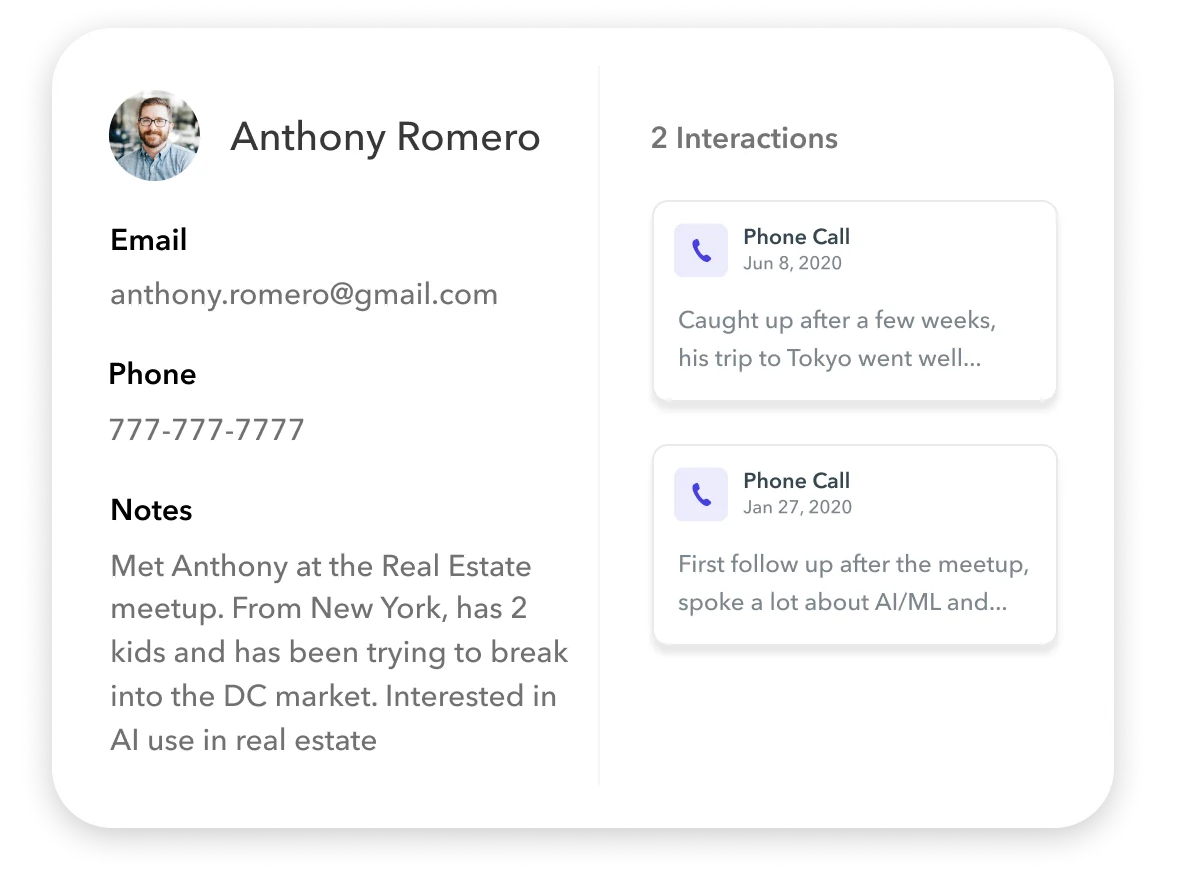
- Founders I have met: substantive conversations, including clear passes and relationships worth continuing by mutual interest.
- Portfolio founders: human context and your own promises only; the firm’s portfolio system remains authoritative.
- Co-investors: people with whom you share judgment, rounds, references, or future collaboration.
- Operators and domain experts: people who can teach, advise, hire, or make an introduction when the fit and consent are real.
Avoid “A-player,” “hot,” and other ranking labels. A deal score may belong in a documented investment process. A private judgment about a person can become bias disguised as data.
Suggested fields—and a hard exclusion list
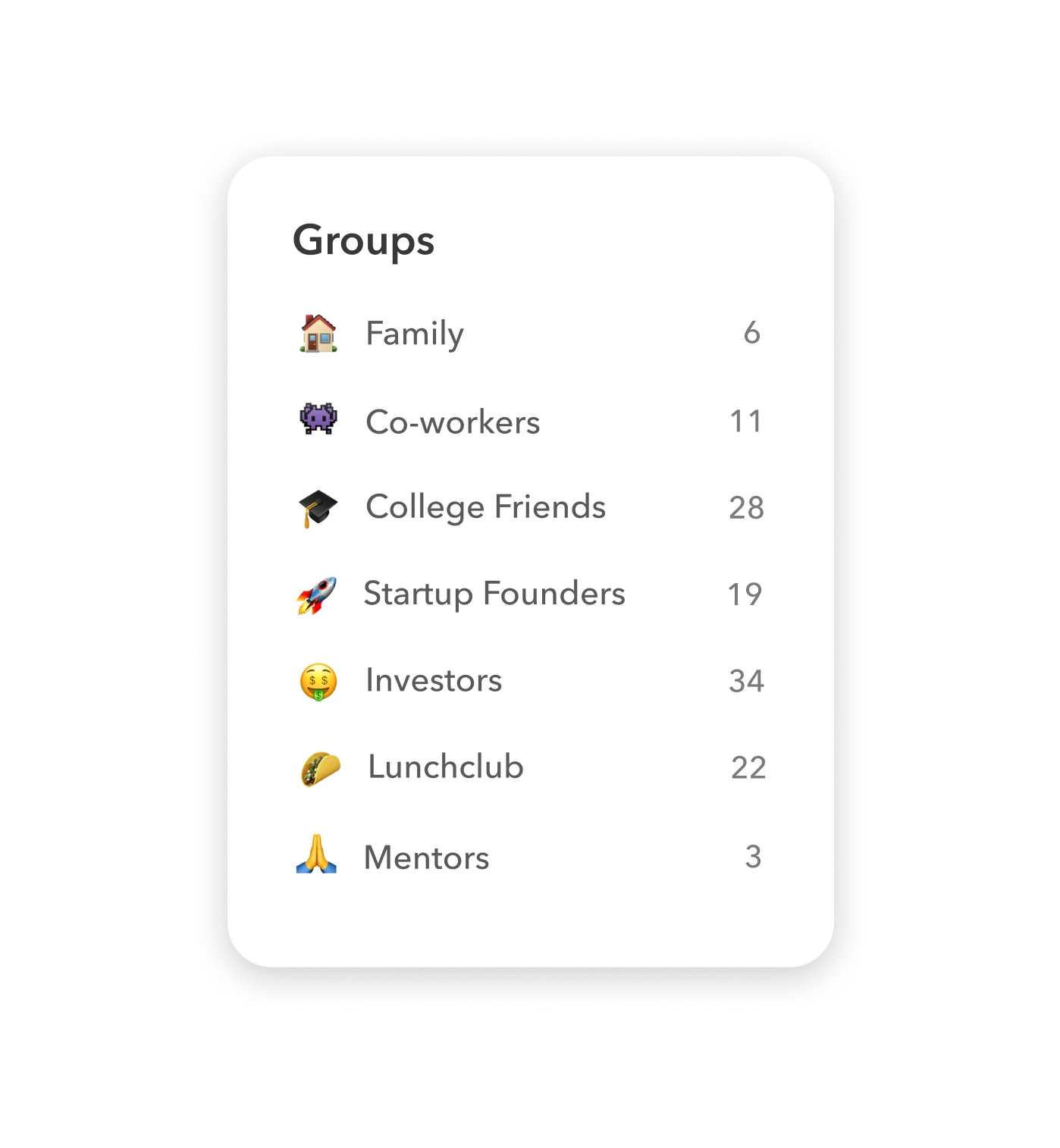
| Field | What belongs there |
|---|---|
| How we met | Introducer, event, prior company, or shared work |
| Current focus | A safe summary of what the person said they are pursuing |
| Memorable thesis | The idea or question worth returning to—not an investment memo |
| My commitment | Reply, reference, introduction, resource, or feedback you promised |
| Permission | Whether an introduction, update, or shared context was invited |
| Next moment | A public milestone or specific date the person asked you to revisit |
| Preferred channel | Where this person actually wants to hear from you |
Do not store decks, term sheets, diligence, financials, investment recommendations, committee notes, material nonpublic information, sensitive personal data, or conflict determinations here. SEC examination staff explicitly asks registered advisers how they identify and contain nonpublic information, retain required records, manage conflicts, and protect records from loss or compromise. Those questions do not apply identically to every angel or fund. They do show why firm policy—not convenience—must decide where regulated or sensitive information lives.
A cadence built around commitments
- Same day or next day: send the promised response. If the decision is a pass, make it clear rather than preserving false optionality.
- Every week: review introductions, references, and feedback you committed to provide. Never introduce two people before both sides have enough context and consent.
- After an invited milestone: reconnect when the founder said a product launch, customer proof, or new stage would make the conversation useful again.
- Monthly: review your own outstanding promises to portfolio founders; do not create another reporting demand for them.
- Quarterly: look for operator or co-investor relationships that have gone one-way. Offer useful context before asking for more.
a16z’s current principles say it returns to entrepreneurs with timely substantive feedback, keeps commitments, and takes a long view of relationships. That is an internal standard, not evidence about the whole market. The practical test for your CRM is simpler: does it make your own word easier to keep?
A concrete relationship workflow
- Resolve the official record first. Put source, stage, decision, diligence, and conflicts in the firm-approved system.
- Capture one human sentence. What did you learn about the person’s thinking, with no confidential detail?
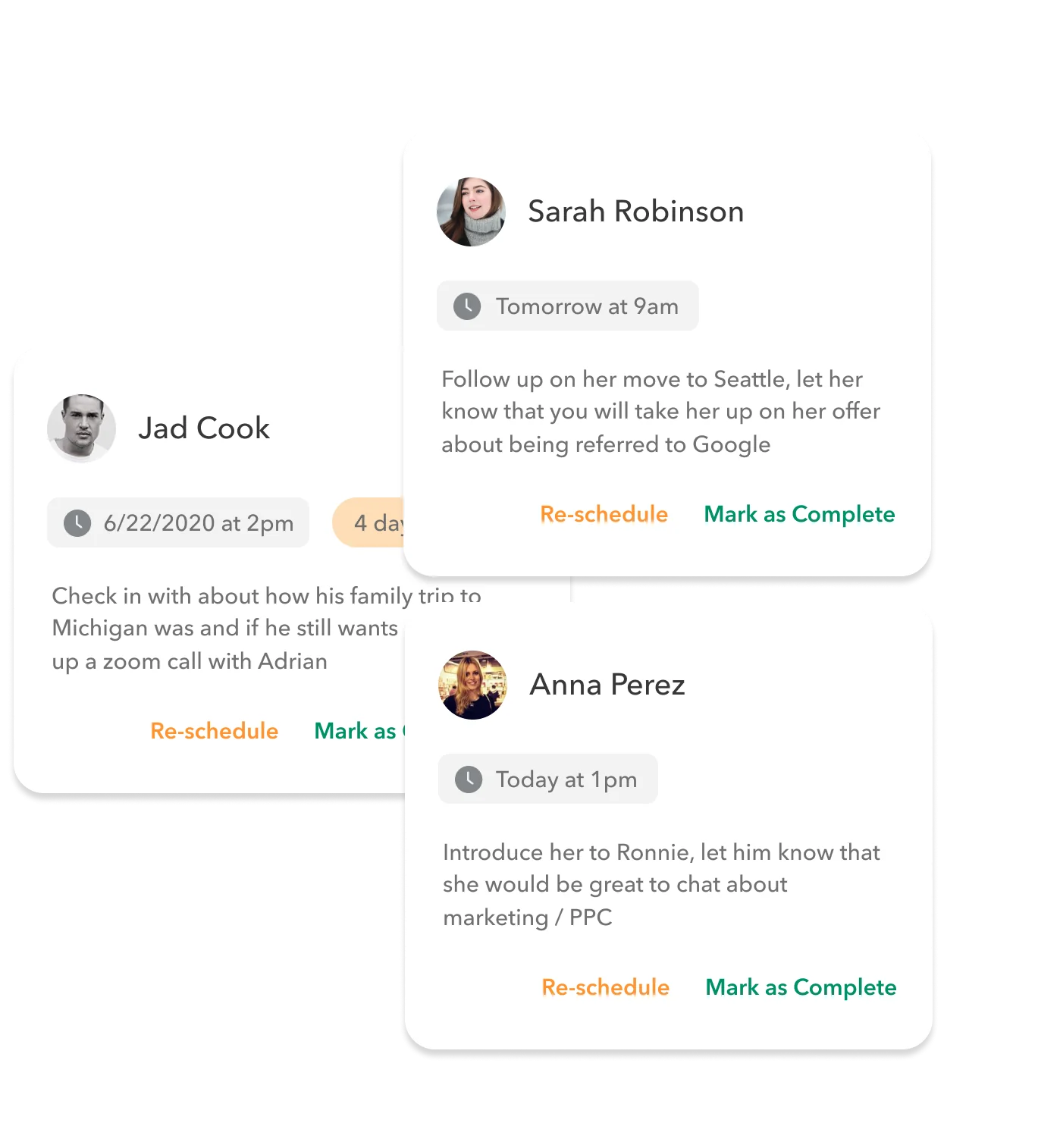
- Record consent and the promise. “Ask Priya before introducing her to Sam” is complete. “Make intro” is not.
- Act, then close the loop. Tell both people what happened; do not treat a sent email as a completed favor.
- Prune aggressively. Delete stale speculation and retain only context that improves future conduct.
For post-investment work, the Angel Capital Association’s older best-practice guide recommends naming a clear contact, matching help to relevant expertise, and agreeing on communication expectations with the entrepreneur. Use those durable operating principles, but do not treat the document as a substitute for current legal or firm guidance.
A realistic example after a pass
Elena meets Ravi, who is building compliance software for regional banks. The company is too early for her fund’s current mandate. Elena records the pass in the firm CRM and sends a direct response. She does not create a fake “nurture” stage.
Ravi says he would welcome another conversation after three paid pilots. Elena notes that permission and one safe piece of context: Ravi’s unusually specific view of implementation work. She promises to send a public procurement resource and does so the next morning.
Six months later, Ravi shares a public launch and says the third pilot is live. Elena now has a legitimate reason to reopen the conversation. If the mandate still does not fit, she can still respond accurately or—with Ravi’s permission—consider an introduction. The relationship survived clarity; it did not depend on ambiguity.
Mistakes that damage trust
- Running a shadow deal-flow CRM: the team loses the authoritative record and required controls.
- Copying confidential material into relationship notes: memory is not a data room.
- Automating “warmth”: generic milestone messages reveal that no real context was retained.
- Keeping founders in indefinite maybe: clarity is more respectful than optionality theater.
- Making introductions without consent: both people inherit an obligation they did not choose.
- Scoring humans: use documented criteria for investments, not covert labels for personal worth.
- Demanding duplicate updates: portfolio reporting should follow the agreed company–firm process.
When Mogul is the wrong tool
Mogul is the wrong system for shared sourcing, ownership of opportunities, email ingestion, diligence workflows, investment committee records, portfolio analytics, LP reporting, retention rules, or supervisory review. Use the approved firm stack for those jobs.
For a broader event-to-follow-up playbook, read these networking tips for people in finance. If automatic contact and communication capture is essential, compare Mogul and Dex. If self-hosting is a requirement, review Mogul and Monica. The personal CRM app guide gives a broader decision framework, and the startup-founder workflow shows the other side of the relationship.
Frequently asked questions
Is Mogul a deal-flow CRM for venture capital?
No. Use it, if at all, for your personal relationship context. A firm needs an authoritative system for opportunities, decisions, diligence, conflicts, portfolio records, and collaboration.
Should I store pitch decks or meeting transcripts?
No. Keep decks and diligence in the approved deal or document system. A personal note should capture only the safe context needed to behave thoughtfully next time.
How should I follow up after passing?
Respond clearly, fulfill any feedback or resource you promised, and note a future milestone only if the founder invited another conversation. A pass does not require disappearance, but it should not masquerade as continuing interest.
How often should I contact founders?
There is no universal quota. Follow the agreed portfolio cadence, a requested next step, or a relevant public milestone. Silence is better than manufactured familiarity.
What belongs in a co-investor note?
Shared context, collaboration history, a promised action, consent for an introduction, and the next legitimate reason to talk. Keep deal allocations, conflicts, recommendations, and confidential company information in approved firm systems.