
Law students
A Personal CRM for Law Students
Explore practice areas, remember advice and referrals, and follow up professionally—without putting client or matter information in a networking tool.
Updated

The useful job: turn conversations with attorneys into better career judgment while keeping legal work out of the relationship database.
A personal CRM for law students is a career-exploration record for people, advice, referrals, and follow-up. It is not a place for client names, matter details, work product, or confidential employer information.
Law school compresses decisions about practice, setting, geography, clerkships, public interest, and sustainable day-to-day work.
Job descriptions rarely answer those questions. People do.
Read what a personal CRM is for the general model. The legal version needs a stricter boundary.
The law-student job-to-be-done: compare paths
Yale Law School’s career-development guidance frames informational interviews around advice, information, and referrals—AIR. It specifically warns students not to ask about job opportunities in the initial informational conversation. The purpose is to learn about a practice, organization, and career path, then find other perspectives.
That makes the relationship record a comparison tool:
- What does this practice look like on an ordinary Tuesday?
- How does it differ across a firm, agency, nonprofit, chambers, or in-house team?
- Which classes, clinics, or summer experiences test the fit?
Make uncertainty precise. “Interested in litigation” is a label; comparing writing, investigation, hearings, and client contact is a useful question.
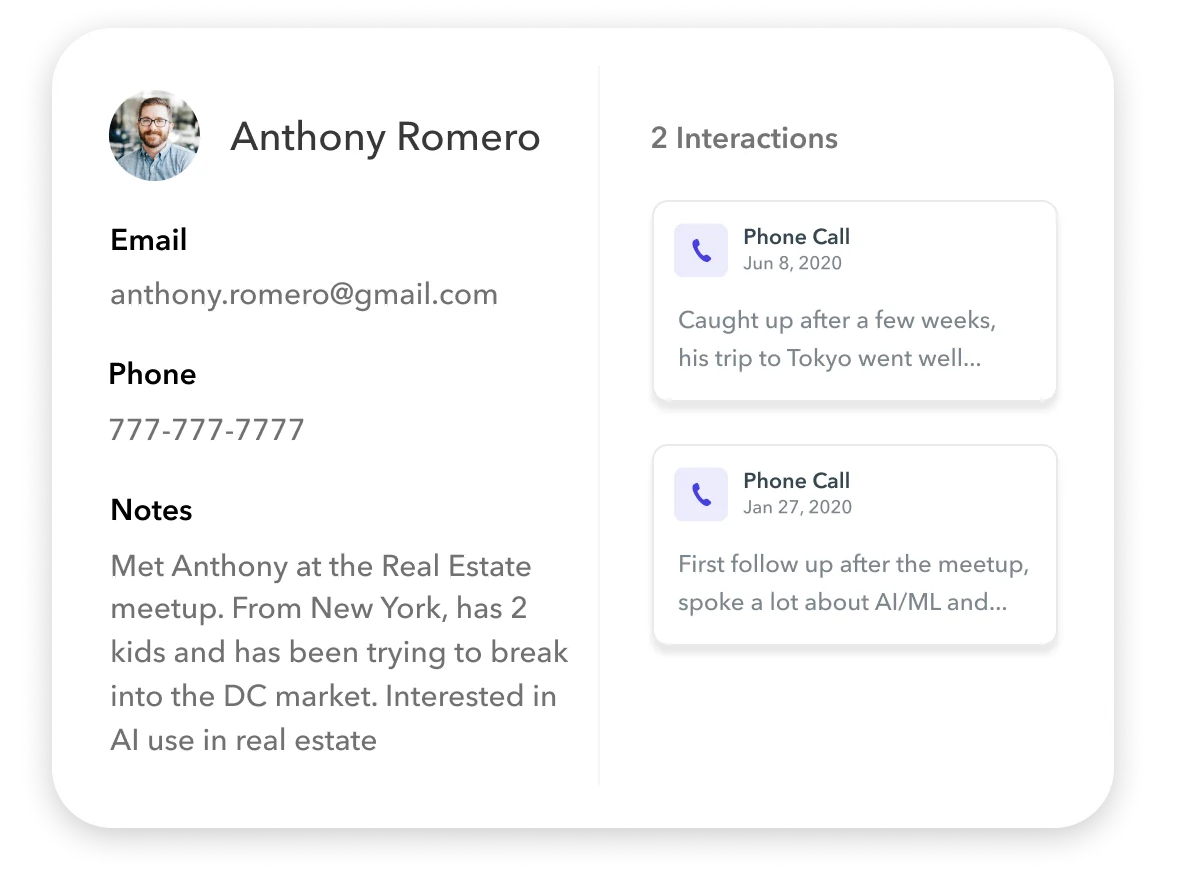
Keep three systems separate
| Relationship system | Recruiting system | Legal work system |
|---|---|---|
| Attorneys, alumni, professors, peers | Employers, roles, deadlines, interview stages | Client and matter records |
| Advice, career perspective, referrals | Applications and school recruiting rules | Documents, facts, strategy, time, conflicts |
| Promised follow-up and non-sensitive context | Resume, transcript, writing sample | Firm- or clinic-approved tools only |
Do not copy client names, matter descriptions, privileged communications, work product, interview questions protected by policy, or confidential employer information into a personal CRM.
ABA Model Rule 1.6 addresses disclosure of information relating to representation and reasonable safeguards against unauthorized access. The Rules are models; local rules, clinic requirements, employer policy, and a student’s role differ. The boundary is simple: a networking app is not an approved legal repository. Ask a supervisor when uncertain.
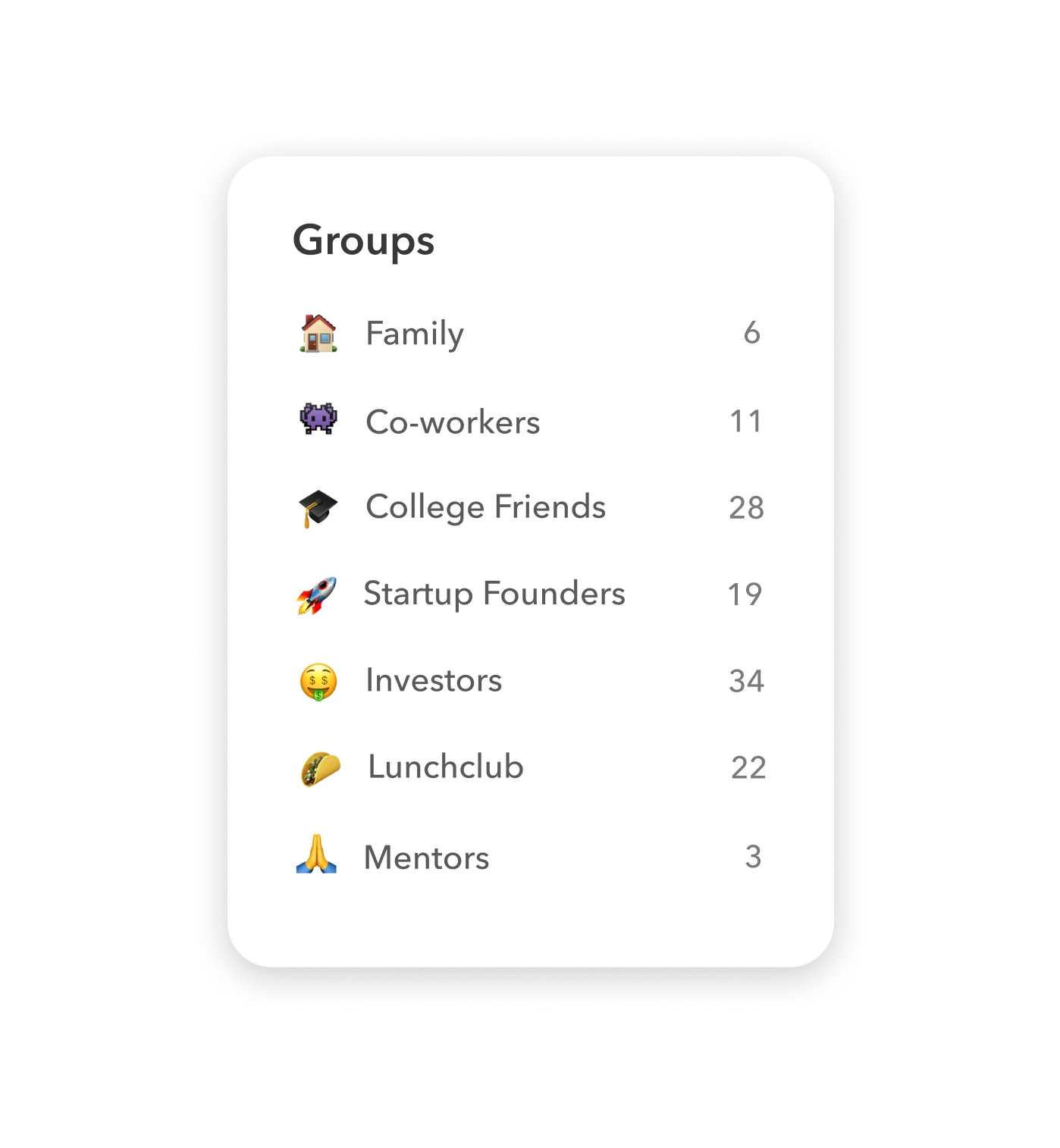
An informational-interview workflow
1. Choose one question and three perspectives
If you are exploring environmental law, do not contact twenty attorneys with the same generic message. Speak with, for example:
- an agency lawyer;
- a nonprofit advocate;
- a firm attorney advising regulated companies.
Differences become visible when the question stays consistent and settings change.
Career offices, professors, alumni directories, bar associations, and classmates can help identify people.
2. Prepare before outreach
Research the attorney’s path, organization, practice, and public work. Explain who you are, why their perspective matters, and what you hope to learn. Ask for a short conversation—not a job.
Yale suggests one follow-up after a week. After a second unanswered message, conclude the outreach or wait two weeks before a final attempt. A CRM can schedule restraint.
3. Be present during the conversation
Yale advises against taking notes during the meeting except for referrals you might forget. Respect the time and listen for how the attorney reached decisions.
Ask questions that a biography cannot answer:
- Which tasks occupy most of a junior attorney’s time?
- Which experiences helped you determine fit?
- What does excellent training look like here?
- Which adjacent practice should I compare?
4. Record the useful memory immediately after
Yale recommends immediate post-meeting notes, a thank-you within 24 hours, prompt referral outreach, and a durable follow-up system.
Capture only what you need:
- advice that changed your thinking;
- public career context;
- a referral and permission to use the person’s name;
- the action you promised;
- an appropriate reason to update them later.
If an attorney mentioned a matter, discard the facts. Keep only a general, non-identifying career lesson—or nothing.
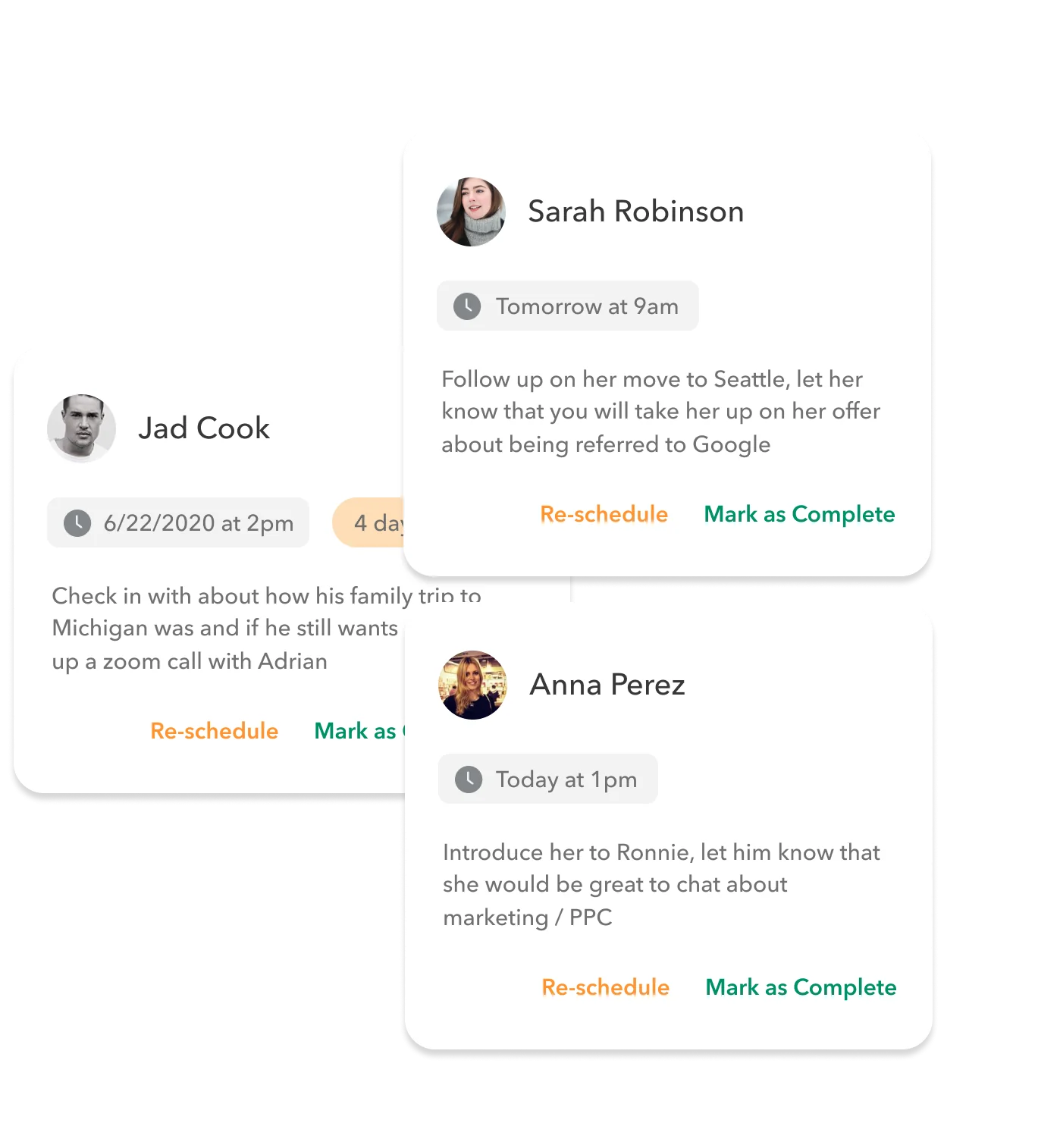
Suggested fields, groups, and cadence
| Part of the system | Suggested setup |
|---|---|
| Essential fields | How introduced; school or bar connection; jurisdiction; practice area; setting; last conversation; career advice; next action |
| Comparison fields | Typical junior work; training model; client-contact level; writing/research balance; recommended experiences; question still open |
| Groups by setting | Firms; government; public interest; judicial; in-house; academia; alternative legal careers |
| Groups by relationship | Alumni; professors; clinic supervisors; former summer colleagues; bar associations; classmates |
| Immediate cadence | Notes after the conversation; thank-you within 24 hours |
| Outreach cadence | One follow-up after a week when unanswered; respect any stated preference |
| Long-term cadence | Update after acting on advice, completing a relevant experience, or making a career decision |
Mogul Basic lists people and interactions. Pro adds groups, custom fields, reminders, and optional E2EE. Encryption does not make inappropriate data appropriate; confirm current encryption details before relying on them. The personal CRM shortlist compares other capture and privacy models.
Mini-example: comparing municipal practice
Fictional example: Nia is a 1L interested in local government. Her professor introduces her to Daniel, a city attorney.
After the call—not during it—Nia records:
- Purpose: Compare municipal practice with state-agency work
- Public context: Daniel moved from a state agency to a mid-sized city
- Learned: Junior lawyers may handle a broad mix of research, meetings, and public-process questions
- Advice: Take the local-government clinic and observe a public meeting before deciding
- Referral: An alum at the state attorney general’s office; permission given to mention Daniel
- Next action: Thank Daniel today; contact referral tomorrow; update after clinic registration
She does not record any matter’s names, facts, or strategy. The system retains the career lesson and discards legal detail.
Mistakes that damage the relationship
- Asking for a job in an informational request. Ask for perspective. Apply through the appropriate process.
- Treating one attorney’s path as a map. Compare settings, seniority, geography, and market conditions.
- Recording when it harms attention. Capture the memory afterward.
- Saving client or matter information. Keep all legal work in approved systems.
- Over-following up. A reminder should help you respect the person’s time, not wear down a nonresponse.
- Automating personal messages. Professional polish cannot rescue a message with no real reason behind it.
- Ignoring recruiting rules. Career-office and employer instructions govern the process.
- Letting recruiting displace education. The ABA’s current first-generation law-student guidance explicitly cautions that recruiting should not come at the expense of coursework.
When not to use a personal CRM
Skip it when a document and calendar are enough. Never use it for legal-work information unless the organization explicitly approves the system and data.
If you are already in an active search, pair the relationship workflow with the job-search guide. College students earlier in the exploration process can use the broader student workflow.
Frequently asked questions
Should law students track every attorney they meet?
No. Add someone when you need to preserve advice, a referral, an agreed next step, or a relationship you intend to continue. A bar-event attendee list is not automatically your network.
What should I write after an informational interview?
Write the career lesson, advice, referral permission, your commitment, and the next appropriate action. Omit client, matter, and confidential employer information.
Can I ask an attorney for a job or referral?
An informational interview should begin as a request for advice and information, not a hidden application. If a formal role exists, follow the stated process. If an attorney voluntarily offers a referral, clarify what they are comfortable doing and how to use their name.
How soon should I send a thank-you?
Yale’s current law-student networking guidance recommends within 24 hours. Mention one useful idea and the action you plan to take.
Does end-to-end encryption make a personal CRM safe for client information?
No blanket conclusion follows from encryption. Client and matter information belongs only in systems approved for the legal work, subject to applicable rules, law, contracts, and employer or clinic policy.
Is this legal advice about professional responsibility?
No. This is an organizational boundary, not a jurisdiction-specific ethics opinion. Ask your supervisor, clinic, school, or qualified counsel about applicable rules.
The strongest record is often the shortest one: what you learned, what you promised, and what you must not store.