Personal CRM for interns
A Personal CRM for Interns: Keep the Learning After the Last Day
Turn a short internship into remembered feedback, stronger working relationships, and evidence you can use in your next career step.
Updated

The real job of an internship is conversion: turn unfamiliar work into skill, feedback into better judgment, and temporary proximity into a few durable professional relationships.
A personal CRM for interns is a private record of who taught you, what you learned, what you owe, and how to stay in touch after the placement ends. It is not a private copy of company systems or a networking scoreboard.
New to the category? Read what a personal CRM does before setting one up.
Your job-to-be-done: leave with more than a line on your resume
NACE defines career readiness through observable competencies including career self-development, communication, professionalism, teamwork, and technology. Its current employer manual says internships benefit from mentorship, feedback, reflection, and milestone-based assessment—not work alone.
Your system should therefore answer three questions:
- Who helps me understand how work gets done here?
- What evidence shows how my skills are changing?
- Which relationships should continue because we did meaningful work or learned together?
The outcome is a record of your growth and a small network that remembers you accurately.
Build a working-network map in week one
Start with people whose context affects your actual experience:
- Supervisor: expectations, priorities, feedback, and evaluation.
- Project partners: the people who depend on your work or whose work you depend on.
- Operating guides: someone who can explain the tools, norms, vocabulary, or decision process nobody wrote down.
- Intern peers: people learning the organization alongside you.
- Career-path conversations: a few people doing work you may want to explore—not every senior leader in the directory.
Harvard’s current summer-experience guidance recommends clarifying expectations and success measures with your supervisor in the first week, then meeting colleagues, other interns, and people across teams. The CRM helps you remember those conversations; the relationships are built by doing reliable work together.
Suggested groups and fields
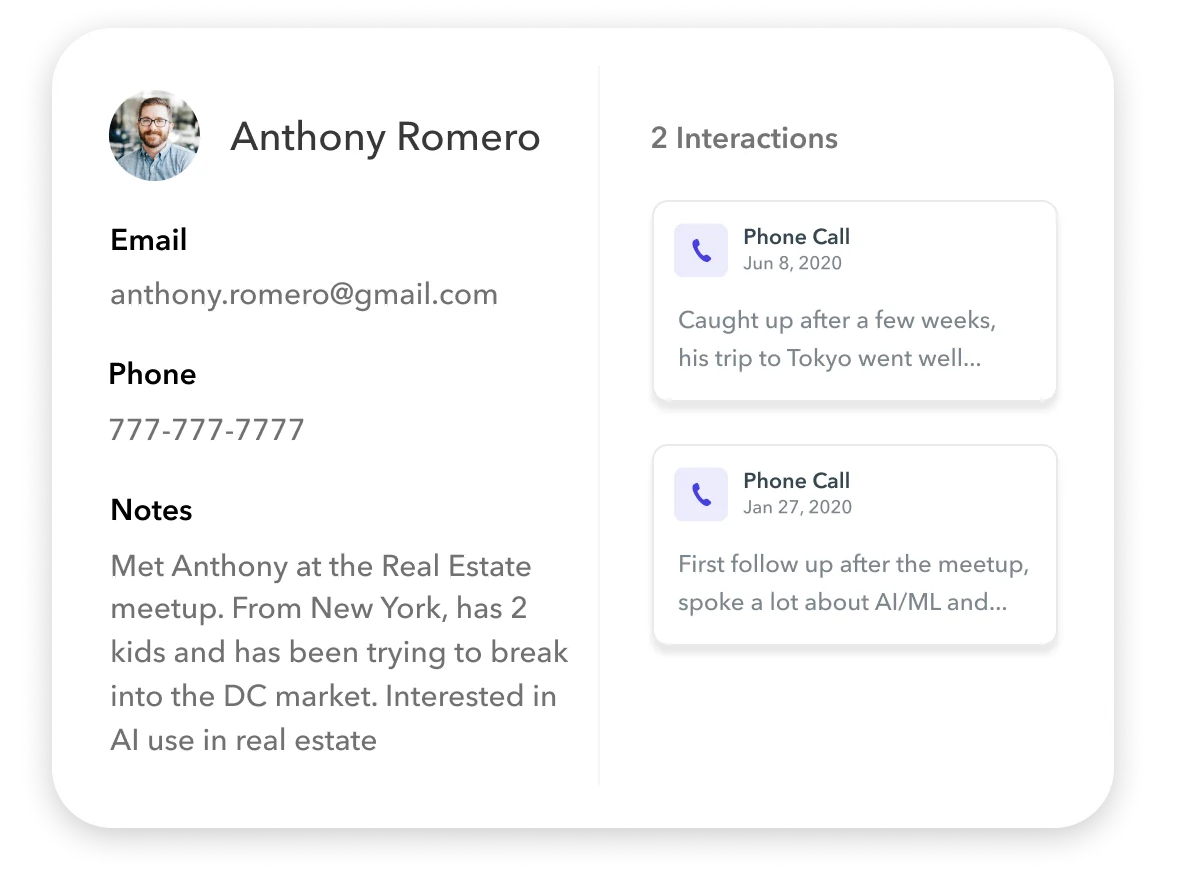
Groups should describe shared context:
- Core project team
- Intern cohort
- People I learned from
- Roles I want to understand
- Stay in touch after the internship
Avoid “high value,” “decision-maker,” and premature “mentor” labels. Mentorship is a relationship, not a tag you assign after one coffee.
Useful fields:
| Field | What to record |
|---|---|
| Team and role | Enough to place the person in the organization |
| How our work overlaps | The project, meeting, or problem you share |
| What I learned | A principle or working method in your own words |
| Feedback received | The behavior to continue or change, without confidential detail |
| My next action | A question to research, revision to make, or promise to deliver |
| Evidence of growth | A safe, non-confidential result you can later translate into a resume story |
| Follow-up preference | Work email now; personal email or LinkedIn later, if invited |
Never paste customer information, source code, internal links, credentials, unreleased plans, personnel comments, performance ratings, or proprietary documents into a personal tool. If a detail belongs to the employer, keep it in an employer-approved system.
A cadence tied to the internship
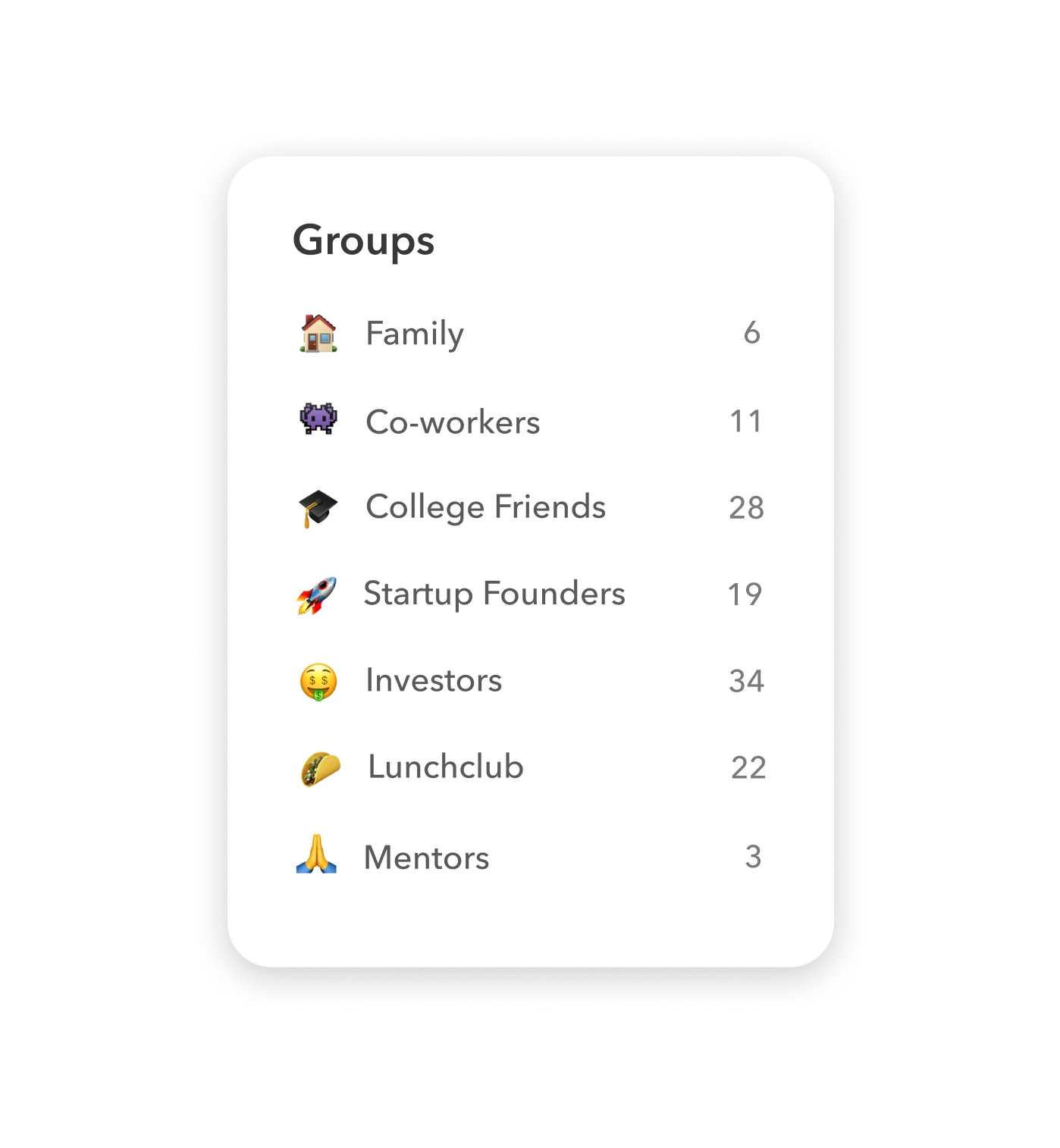
An internship has natural moments. Use them instead of arbitrary “stay warm” alerts.
Every week: prepare for the supervisor check-in
Before the meeting, note one completed result, one blockage, one question, and one skill you are practicing. Ask what “better” would look like next week. Afterward, record the feedback you can act on—not a transcript of the conversation.
Every one or two weeks: learn beyond your immediate task
Choose one person whose work intersects with yours. Ask a focused question after first learning what you can on your own. The University of Washington advises interns to research before asking and to explain what they already tried when they need help.
At the midpoint: ask for directional feedback
Do not wait for the final evaluation to discover a correctable problem. Review your original goals with your supervisor: what should you continue, stop, or begin doing? NACE and Stanford both emphasize midpoint reflection and feedback as part of learning.
Seven to ten days before the end: close loops
Finish or hand off work, prepare a safe summary of contributions, request feedback while people still have time, and ask how colleagues prefer to stay in touch. Harvard recommends summarizing accomplishments, thanking supporters, and discussing appropriate next steps near the end.
After the internship: follow relevance, not a quota
Send specific thank-yous. Share an outcome when their advice changes something. Congratulate a former teammate when you genuinely notice a milestone. Do not schedule hollow quarterly messages to everyone you met.
A realistic ten-week example
Leah is an analytics intern on a subscription team. In week one, her supervisor explains that a useful analysis must end with a decision, not a dashboard. Leah records that principle and asks how her first project will be evaluated.
In week three, a lifecycle marketer shows her why one customer segment is misleading. Leah revises the analysis and notes the feedback: “Check how a segment was created before interpreting behavior.” She does not copy customer data or internal charts into her personal CRM.
At the midpoint, Leah shows her supervisor two before-and-after examples of her reasoning. They agree she should explain assumptions earlier. Before leaving, she writes an approved summary: she analyzed retention behavior, documented assumptions, and presented a recommendation adopted for the next test. She thanks the marketer for changing how she checks segmentation and asks whether LinkedIn is a comfortable way to stay in touch.
Months later, Leah can explain both the work and the growth. The relationship record restores the story; it does not expose the company.
Mistakes that weaken the internship
- Collecting senior people instead of learning from coworkers: proximity is not a relationship.
- Calling every helpful person a mentor: let repeated trust earn the word.
- Saving confidential details: a personal CRM is outside the company’s control.
- Waiting until the final week for feedback: late feedback cannot improve much of the experience.
- Logging praise but ignoring correction: the useful record includes what changed in your work.
- Treating peer interns as competition: they may become your longest-lasting professional cohort.
- Asking for a reference before earning evidence: first ask how your work is landing and act on the answer.
When not to use a personal CRM
Skip it if your approved notes, calendar, and a simple reflection document already give you continuity. Do not use one if employer policy prohibits storing colleague information externally. And do not add a second system if it distracts from the work itself.
For tool choices, see the source-checked personal CRM shortlist. If you are still looking for the placement rather than working inside one, use the job-search relationship workflow. Broader early-career guidance also lives on the student page and MBA student page.
Frequently asked questions
Is it strange to track people I meet during an internship?
It depends on what you store. A short note about professional context, advice, and a promise can support considerate follow-through. Secret ratings, personal speculation, or confidential workplace content are inappropriate.
When should I connect with a colleague on LinkedIn?
After you share real professional context—a project, meeting, or substantive conversation. LinkedIn says connection requests work best when people have worked or studied together, met at an event, or want to continue a conversation.
How do I ask someone to be a reference?
Ask after they have directly observed work you are proud to discuss. Make the request optional, explain the role you may pursue, and give them an easy way to decline. A reference should never be inferred from a CRM label.
What if the internship is remote?
Make the invisible visible without over-reporting. Schedule regular supervisor check-ins, share concise progress, participate in meetings, and request a small number of purposeful cross-team conversations. Track the next action, not screen time.
What if I learn that I dislike the field?
That is a useful result. Record which tasks, environments, or incentives did not fit and which skills still transfer. Thank the people who helped you learn; a relationship can remain valuable even when the career path does not.